Best Tea for Bloating: Herbal Teas That May Support Digestion
Explore traditional herbs and naturally caffeine-free teas commonly enjoyed after meals and as part of a comfortable digestive routine.
Feeling bloated from time to time is something almost everyone experiences. Whether it's after a large meal, eating too quickly, or simply enjoying foods that don't always agree with you, that uncomfortable feeling of fullness can put a damper on your day.
While no tea can magically eliminate bloating, many people enjoy herbal teas as part of their digestive routine. A warm cup after a meal can be comforting, and certain herbs have been traditionally used for generations to support healthy digestion.
If you're looking for a natural way to unwind after eating, herbal tea is a simple place to start.
What Causes Bloating?
Bloating happens when your stomach or intestines feel unusually full or swollen. Sometimes it's caused by excess gas, while other times it may simply be the result of eating a large meal or consuming foods that are harder for your body to digest.
Can Herbal Tea Help With Bloating?
Many herbs have a long history of traditional use for digestive comfort.
While research on individual herbs continues, many people enjoy herbal tea because the warm liquid and carefully selected botanicals can be a soothing addition to their daily routine.
Rather than viewing herbal tea as a treatment, it's better to think of it as one small habit that may help you slow down after meals and support overall digestive wellness.
Herbs Commonly Used for Digestive Comfort
Many herbal blends designed for digestion contain herbs that have been used in traditional wellness practices for centuries.
Peppermint
Peppermint is one of the best-known herbs for digestive comfort. Its cool, refreshing flavor makes it a popular after-meal tea.
Ginger
Ginger has been enjoyed around the world for generations. Its naturally warming flavor pairs well with many digestive tea blends.
Fennel
Fennel seeds have long been used in traditional herbal practices and offer a slightly sweet, licorice-like flavor.
Chamomile
Chamomile is often associated with relaxation, but it's also commonly included in digestive tea blends because of its gentle taste.
Lemon Balm
Lemon balm brings a mild citrus flavor and is frequently combined with other herbs in soothing herbal teas.
When Should You Drink Tea for Bloating?
Many people enjoy digestive herbal tea shortly after eating, especially following larger meals.
Others simply include it as part of their afternoon or evening routine to help encourage relaxation after a busy day.
Because most herbal digestive teas are naturally caffeine-free, they can often be enjoyed later in the day without the stimulating effects of traditional tea or coffee.
Other Ways to Reduce Occasional Bloating
Herbal tea works best alongside other healthy habits.
You may also find it helpful to:
- Eat more slowly.
- Drink plenty of water throughout the day.
- Stay physically active.
- Limit heavily processed foods when possible.
- Pay attention to foods that consistently cause discomfort.
Small lifestyle changes often have a bigger impact than any single food or beverage.
Choosing a Quality Digestive Tea
A good herbal tea starts with quality ingredients.
Look for blends made with recognizable herbs instead of artificial flavors or unnecessary fillers. Loose-leaf teas often contain larger pieces of herbs, flowers, and roots, allowing more flavor and aroma to develop during brewing.
Every blend is different, so choose one that fits both your taste and your wellness goals.
Comforting Cups After Every Meal
Looking for a soothing herbal tea to enjoy after meals? Both of these blends bring together herbs traditionally used for digestive comfort, crafted in small batches for everyday enjoyment.
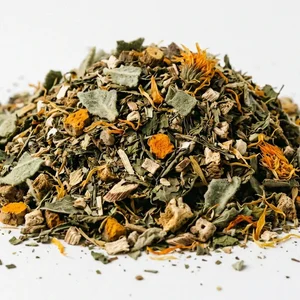
Forager's Cure
Built around burdock and dandelion, two roots with a long tradition in digestive wellness blends.
Shop Now →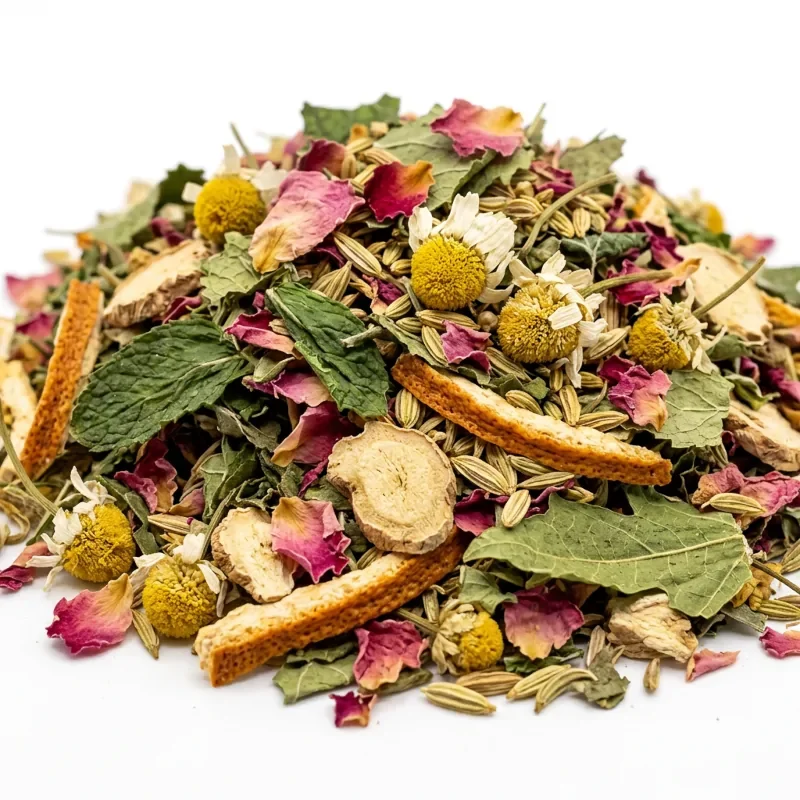
Bloom Again
Combines peppermint, ginger, fennel seed, chamomile, and lemon balm — all five herbs featured above, in one blend.
Shop Now →Frequently Asked Questions
What is the best tea for bloating?
Many people choose herbal teas containing peppermint, ginger, fennel, chamomile, or lemon balm because these herbs have traditionally been used to support digestive comfort.
Can herbal tea help with bloating?
Herbal tea isn't a cure for bloating, but many people find that enjoying a warm, caffeine-free herbal tea after meals is a comforting part of their digestive routine.
Is peppermint tea good for digestion?
Peppermint tea has long been enjoyed as a refreshing herbal tea and is one of the most popular ingredients found in digestive tea blends.
When should I drink tea for bloating?
Many people drink herbal tea shortly after meals or whenever they experience occasional digestive discomfort.
Is ginger tea good for bloating?
Ginger has been traditionally used for digestive wellness for centuries and is commonly included in herbal blends designed for digestive comfort.
Does herbal tea reduce stomach bloating instantly?
No. Herbal tea isn't an instant solution. It works best as part of an overall healthy lifestyle that includes balanced eating habits, hydration, and regular physical activity.
Which herbal teas are naturally caffeine-free?
Most herbal teas, including peppermint, chamomile, ginger, lemon balm, and fennel blends, are naturally caffeine-free because they aren't made from the traditional tea plant.